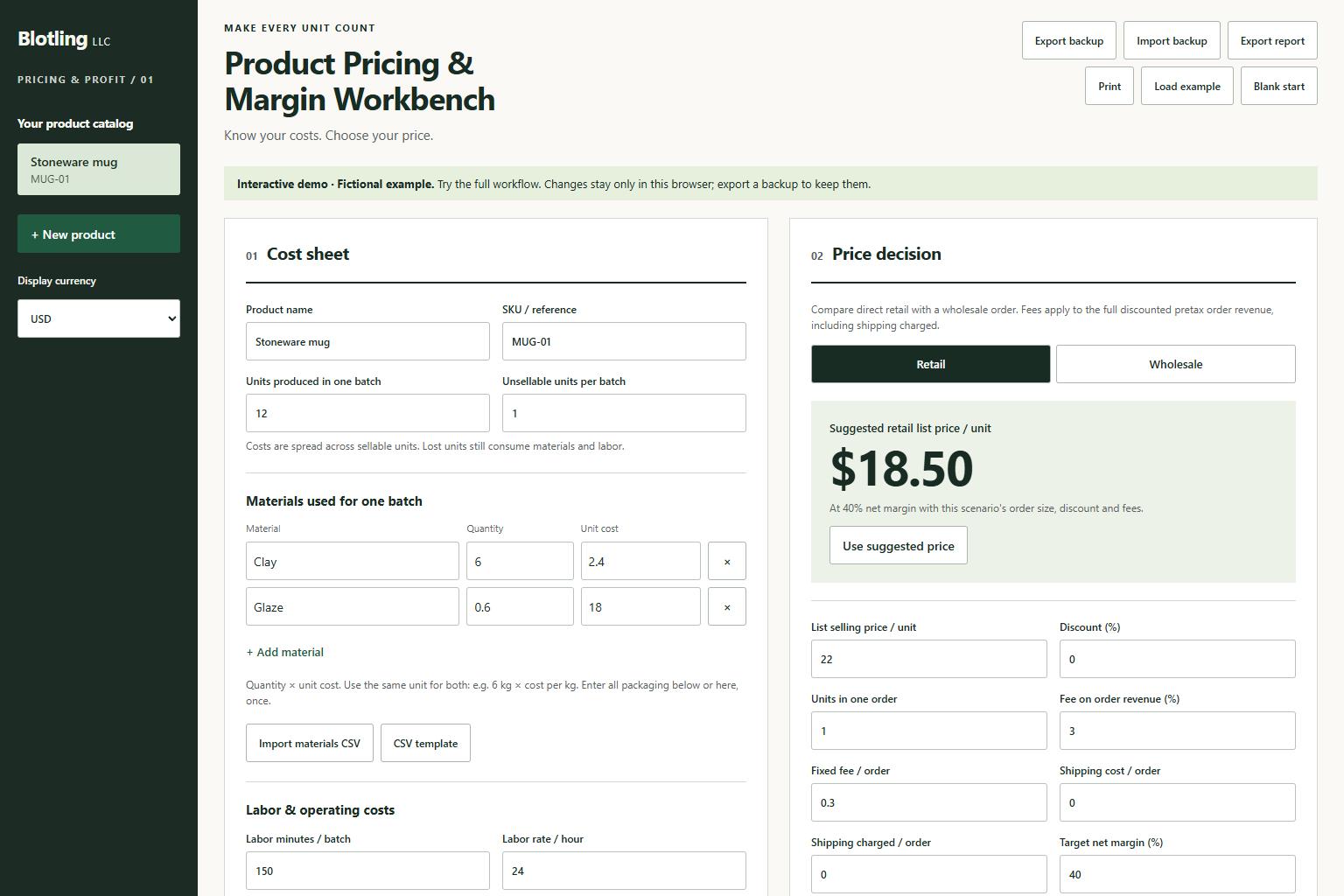
Compare retail and wholesale pricing with the costs that matter.
Build a product cost sheet, allow for unsellable units, and compare retail and wholesale orders with your own fees, shipping and discount assumptions. Review an upward-rounded price for a chosen net-margin target.
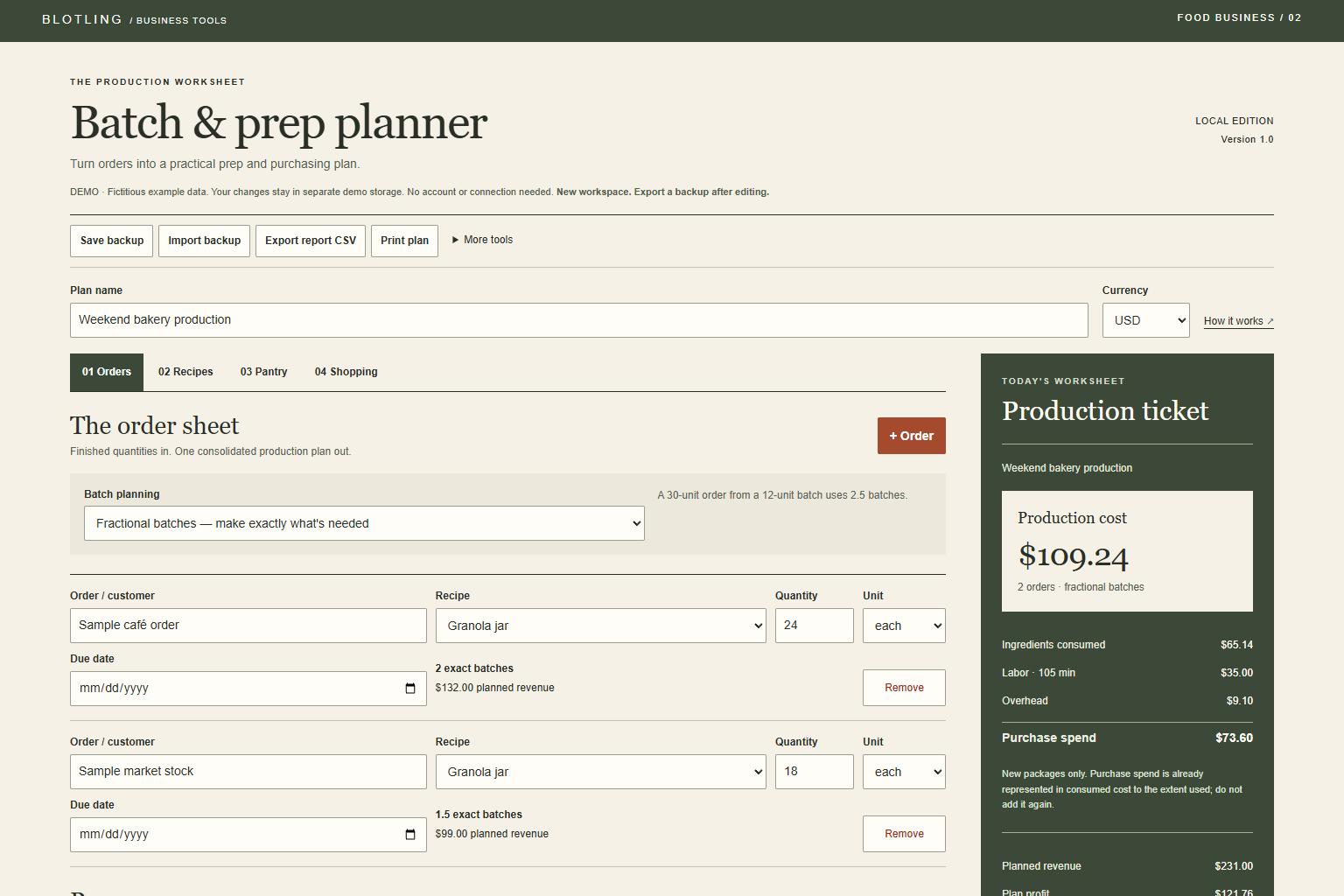
Turn several orders into one prep and purchasing plan.
Scale recipes and shared subrecipes across a production run. Account for usable yield, raw stock, labor and whole-package purchases while keeping consumed cost separate from the cash needed to shop.
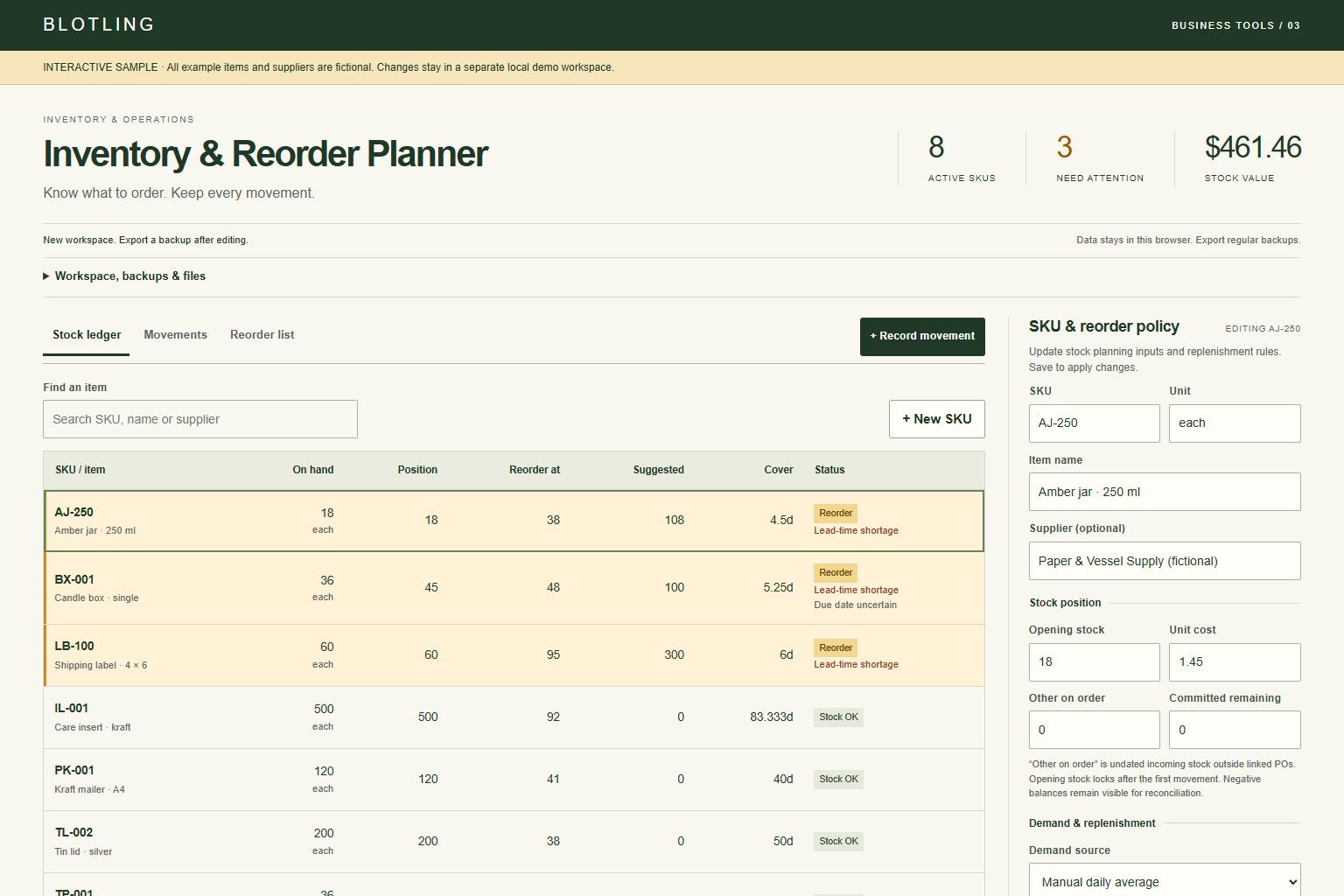
See what to reorder and keep a record of stock movements.
Track SKUs, receipts, issues, reservations and purchase-order balances. Compare inventory position with a lead-time and safety-stock policy, then round suggested quantities to order packs and minimums.
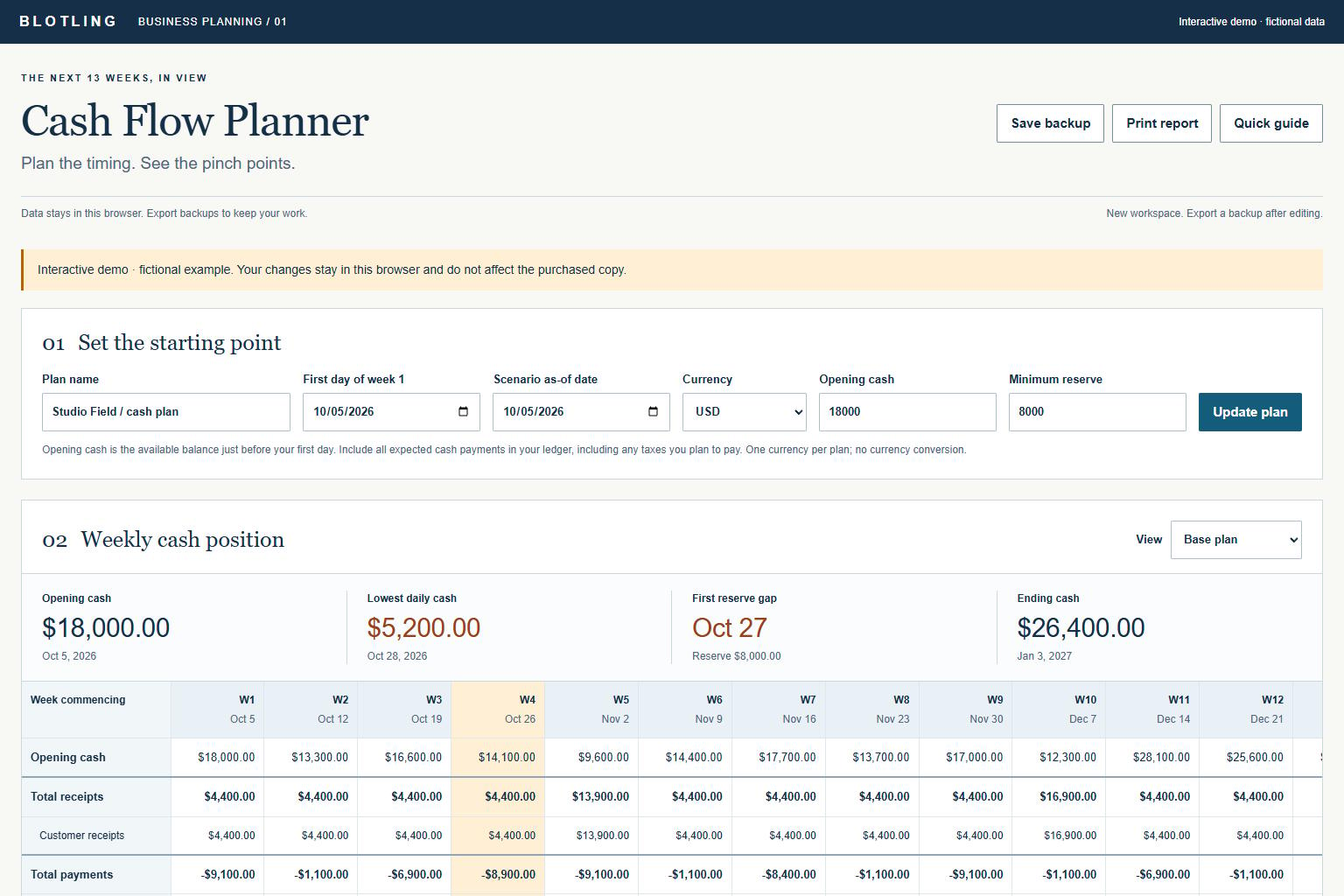
See when cash gets tight, even if the quarter ends well.
Arrange expected receipts and payments by date, roll 91 daily balances into 13 weeks, and compare a named timing or percentage scenario. Track actuals against specific forecast occurrences and highlight minimum-reserve gaps.
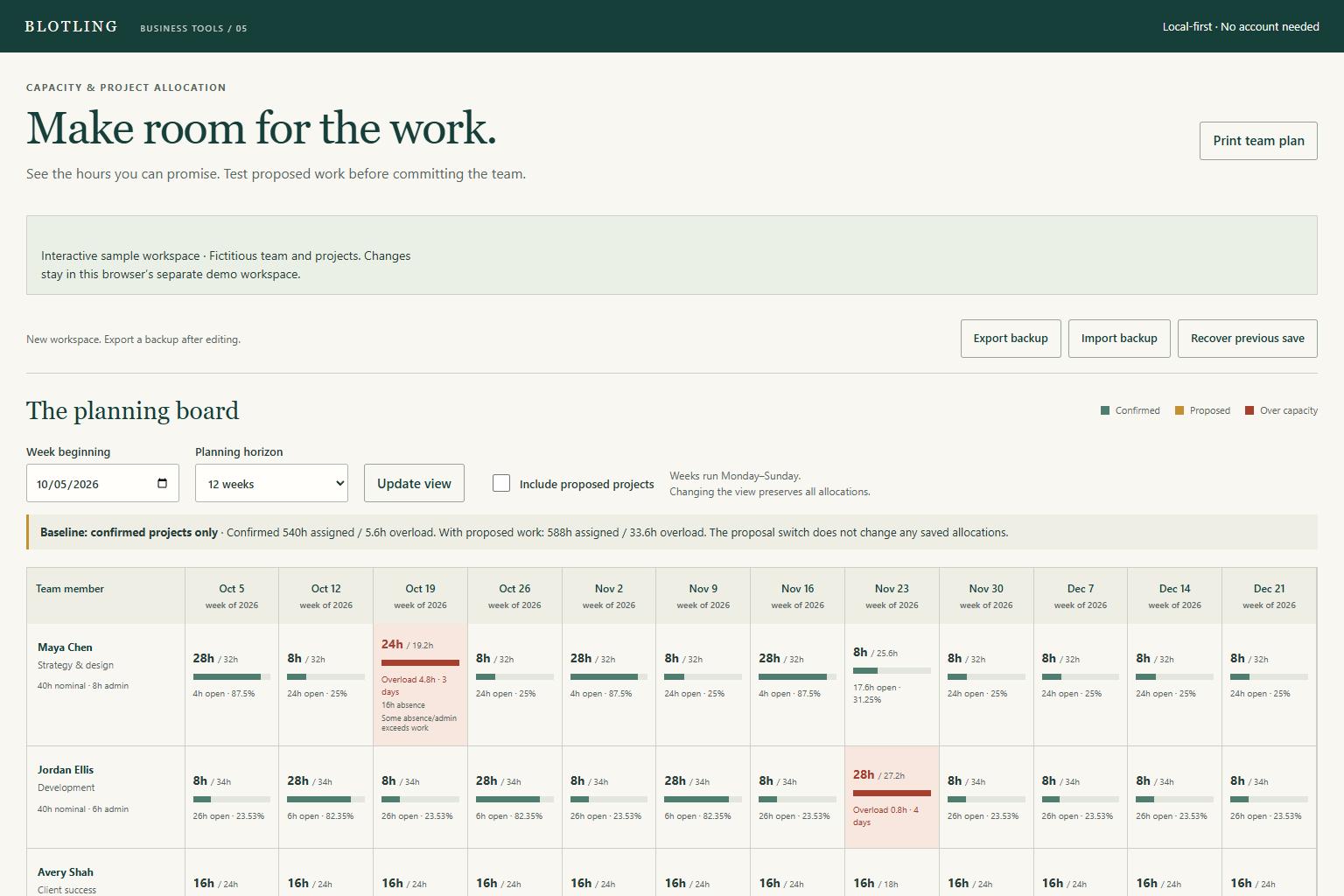
Check proposed work against realistic daily availability.
Model weekday hours, admin time, holidays and absences, then distribute project effort across available dates. Compare confirmed work with proposed projects and find person-day overload that a team-wide average can hide.
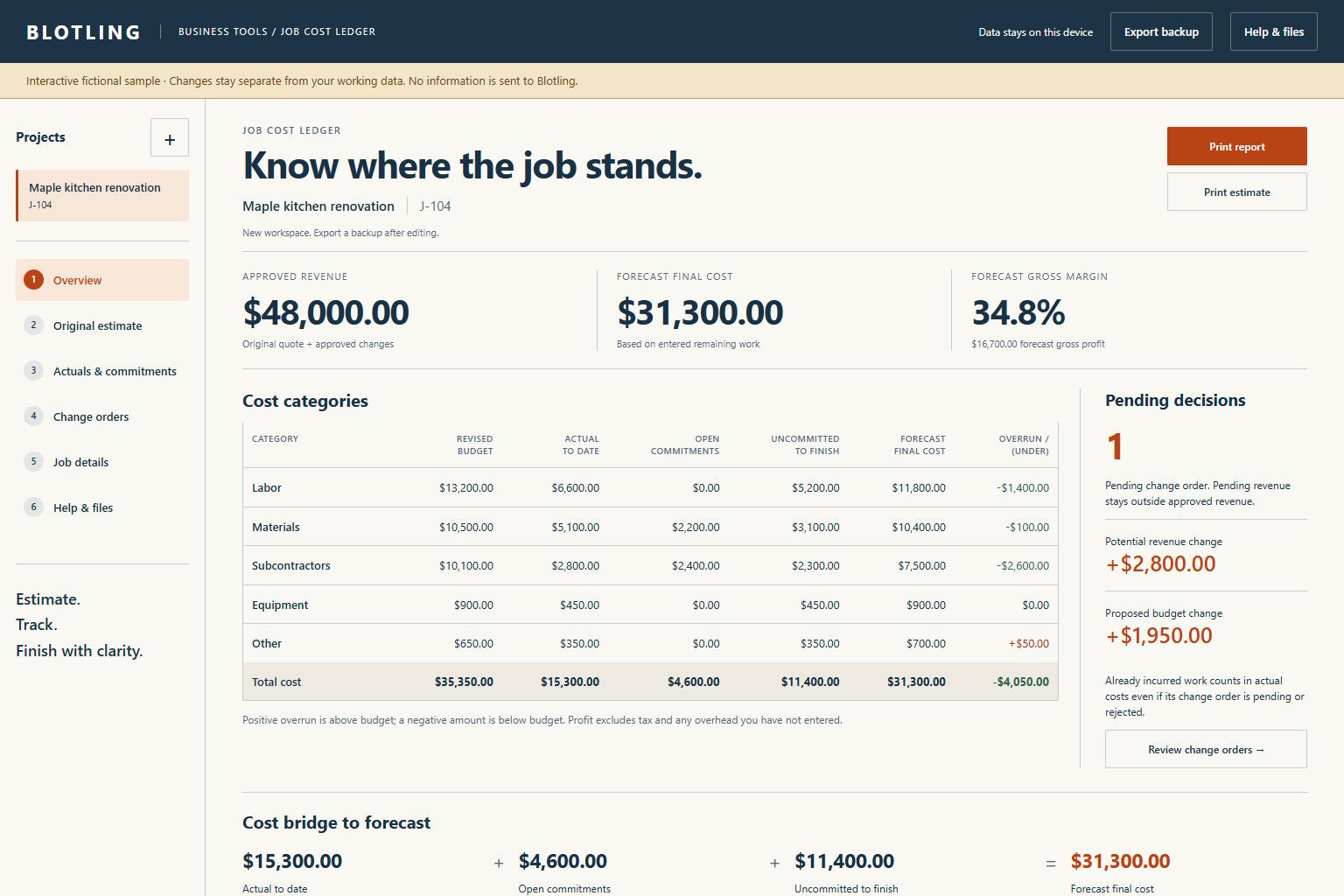
Keep estimate changes and remaining work from hiding margin drift.
Freeze an original estimate, record incurred costs, link actuals to open commitments and enter remaining uncommitted work. Review approved changes separately from pending requests and see the resulting final-cost and gross-profit forecast.